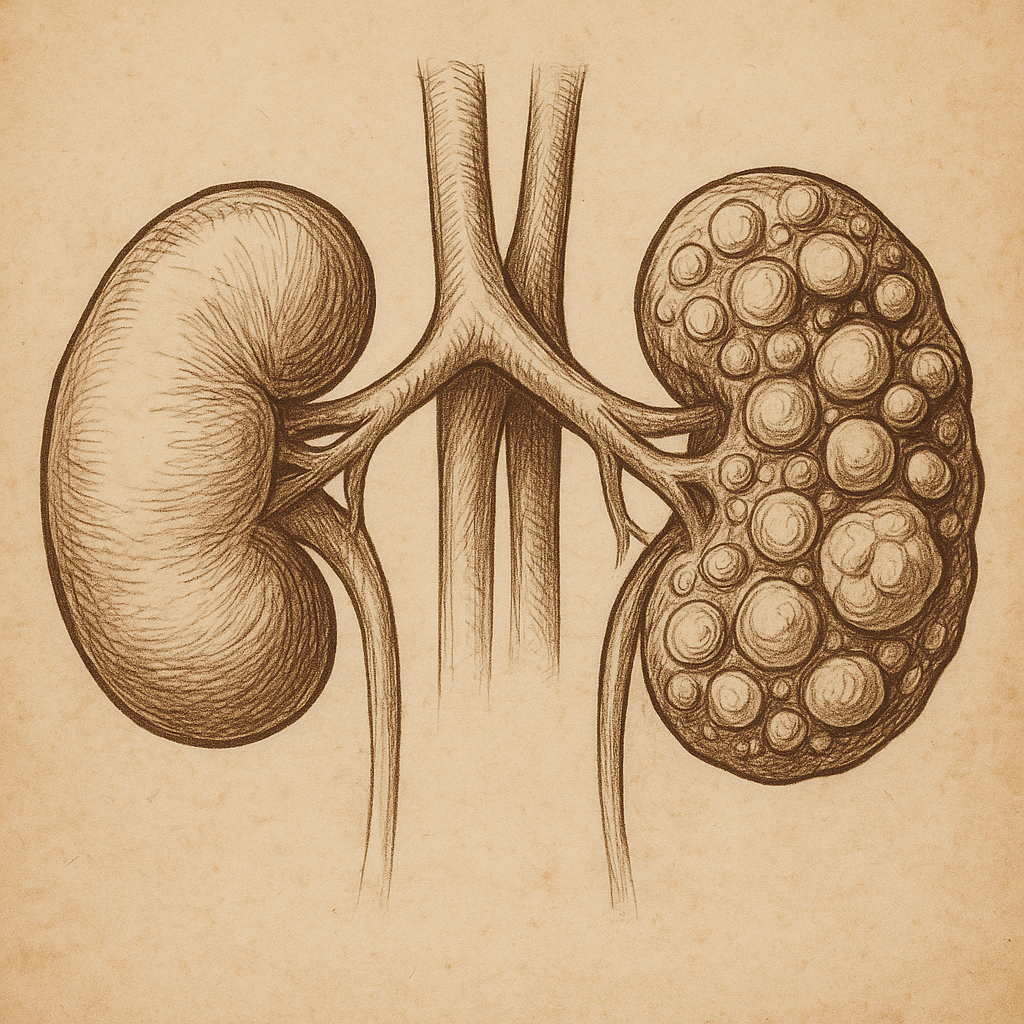
What Is Polycystic Kidney Disease?
Polycystic kidney disease (PKD) is an inherited condition that causes multiple fluid-filled cysts to develop in the kidneys. Among its types, the most common is Autosomal Dominant Polycystic Kidney Disease (ADPKD), which usually manifests in adulthood. As a result, it can lead to kidney enlargement and, over time, loss of function. Therefore, understanding this disease is crucial for timely diagnosis and effective management. In this way, patients and caregivers can make more informed decisions to protect kidney health.
What Happens in the Kidneys With ADPKD?
ADPKD is caused by mutations in genes responsible for producing proteins (polycystin 1 and polycystin 2) that regulate kidney cell function. Because of these changes, normal cellular processes in the kidney tubules are disrupted, leading to abnormal growth and fluid secretion. As a result, tiny tubules in the kidneys expand and gradually fill with fluid, forming cysts. Over time, these cysts enlarge and detach from the filtering units (nephrons). Consequently, they replace healthy kidney tissue and impair kidney function. In addition, this progressive cyst growth causes the kidneys to become enlarged, which can lead to discomfort or a feeling of fullness in the abdomen.
The Process of Cyst Development and Growth
Cyst formation begins with the dilation of kidney tubules as a result of abnormal cell behavior. Afterward, the cysts continue to fill with fluid secreted by the lining cells, growing steadily. Over time, these cysts become isolated from the regular filtration system and therefore no longer contribute to kidney function. Eventually, as cysts multiply and enlarge, they crowd out normal kidney tissue. Consequently, the kidneys lose their ability to filter waste effectively and maintain fluid balance.
Common Symptoms of Autosomal Dominant Polycystic Kidney Disease
Many people with ADPKD have no symptoms in early stages. However, when symptoms do appear, they commonly include:
- Pain: Flank, back, or abdominal pain caused by enlarging cysts or cyst bleeding.
- Hematuria: Blood in the urine, which can be intermittent, may occur from ruptured cysts.
- High blood pressure: Often one of the first signs, caused by cyst-related kidney changes affecting blood flow regulation.
- Urinary tract infections and kidney stones: These complications can arise due to structural changes and cyst effects on the urinary tract.
Progression and Complications of Polycystic Kidneys Disease
Without proper management, cyst growth leads to gradual kidney enlargement and loss of function, often progressing to chronic kidney disease (CKD) or kidney failure by middle age. ADPKD can also affect other organs, leading to:
- Liver cysts, which may cause discomfort or liver enlargement.
- Heart valve abnormalities, such as mitral valve prolapse.
- Increased risk of cerebral aneurysms, posing potential for serious brain hemorrhage.
Diagnosis and Monitoring
Doctors diagnose ADPKD primarily through imaging tests such as ultrasound, CT scans, or MRI, which reveal the presence of kidney cysts. In some cases, genetic testing can also confirm the diagnosis, especially when there is a family history of the disease. After the diagnosis is made, regular monitoring of kidney size, kidney function (e.g., measuring glomerular filtration rate), and blood pressure becomes vital. This way, disease progression can be managed more effectively and complications can be prevented.
Living With Polycystic Kidneys Disease
Early diagnosis empowers patients to take active steps to protect kidney function. In particular, managing high blood pressure is critical, and this can often be achieved with lifestyle modifications such as a kidney-friendly diet low in sodium, adequate hydration, and the avoidance of smoking. In addition, medications may be prescribed to slow cyst growth or to control symptoms. Finally, patients are encouraged to maintain regular kidney checkups and adopt healthy habits to reduce kidney stress over time.
FAQs
What causes cysts in ADPKD?
Genetic mutations disrupt normal kidney tubule cell functions, causing abnormal growth and fluid buildup that form cysts.
Can ADPKD be cured?
There is no cure, but treatments can slow cyst growth and manage symptoms effectively.
How is ADPKD diagnosed?
Diagnosis is based on kidney imaging (ultrasound, CT, MRI) supported by family history and sometimes genetic testing.
Does ADPKD always lead to kidney failure?
Not always; many live with mild disease, but about half develop significant kidney failure by age 60.
Can lifestyle changes help manage ADPKD?
Yes, controlling blood pressure, maintaining hydration, healthy diet, and avoiding kidney stressors are important.
Further Reading
- National Institute of Diabetes and Digestive and Kidney Diseases (NIDDK) on ADPKD: https://www.niddk.nih.gov/health-information/kidney-disease/polycystic-kidney-disease/autosomal-dominant-pkd
- Kidney Disease: Improving Global Outcomes (KDIGO) guidelines: https://kdigo.org/guidelines/
- National Kidney Foundation on ADPKD: https://www.kidney.org/kidney-topics/polycystic-kidney-disease
References
- Polycystic Kidney Disease Diet: What is Known and What is Safe Fouad. T Chebib 2023.
- NHS UK. Autosomal dominant polycystic kidney disease – symptoms. 2025.
- Kidney Research UK. Polycystic kidney disease symptoms and treatment. 2024.
- NIDDK. Autosomal Dominant Polycystic Kidney Disease. 2025.
- Mayo Clinic. Polycystic kidney disease – Symptoms and causes. 2025.
Related Reading
- Hydration in ADPKD: Can Water Slow Cyst Growth? https://danielpindral.com/hydration-in-adpkd-can-water-slow-cyst-growth/


No responses yet